Reprogram Biosciences on Rewriting Cellular Behavior with mRNA


At Reprogram Biosciences, cell reprogramming is at the center of a new way of thinking about therapeutics. Below, Rustam Esanov (CEO) and Eziz Kuliyev (COO) from Reprogram Bio shares—in their own words—how the team is approaching this shift, where they are focusing first, and how partnering with Helix has helped accelerate their work.
Reprogram’s Mission and Current Focus
“To start, could you give a quick overview of Reprogram Biosciences and what your current main project or focus is?
We are building a new class of therapies that work by rewriting what cells do inside the body. Rather than modulating a single target like most small molecules or antibodies, we use mRNA to transiently express defined gene programs that reshape cell identity and function from the inside out. Our lead programs are in oncology, where we aim to reprogram cells within the tumor microenvironment into immune activating states that can drive durable anti-tumor immunity.”

Where Cell Reprogramming Can Go Next
“What kinds of applications or therapeutic areas are you most excited about right now either within or outside of your own work?
While conceptually this approach could be applied across many different diseases, and we fully expect reprogramming therapeutics to be tested in additional areas over the coming years, we are most excited about applications in oncology. Our initial focus is on programs at the intersection of immunotherapy and cell fate control, with the goal of turning immunologically cold tumors into active participants in an anti-tumor immune response. Looking beyond cancer, we also see strong potential in inflammatory diseases, fibrosis, and regenerative indications, where changing cell state rather than killing or replacing cells could fundamentally reshape disease biology.”
What Sets Reprogram’s Platform Apart
“What sets your company and platform apart from others in your respective field?
At the core of our approach is the idea that cell identity itself can be programmed directly in vivo. To make this practical, we are early adopters of biological foundation models and AI-driven perturbation prediction, which we use to rapidly explore transcriptional space and narrow large candidate gene programs down to a small, testable set. This tight integration of computational prediction with experimental validation allows us to move faster and learn more efficiently in the lab, while still delivering these programs transiently using mRNA without permanent genetic modification or ex vivo cell manufacturing.”
How Cell Reprogramming Works
“Your platform is built on the idea of cell reprogramming. Can you share how that works, and what challenges come with that kind of system-level engineering?
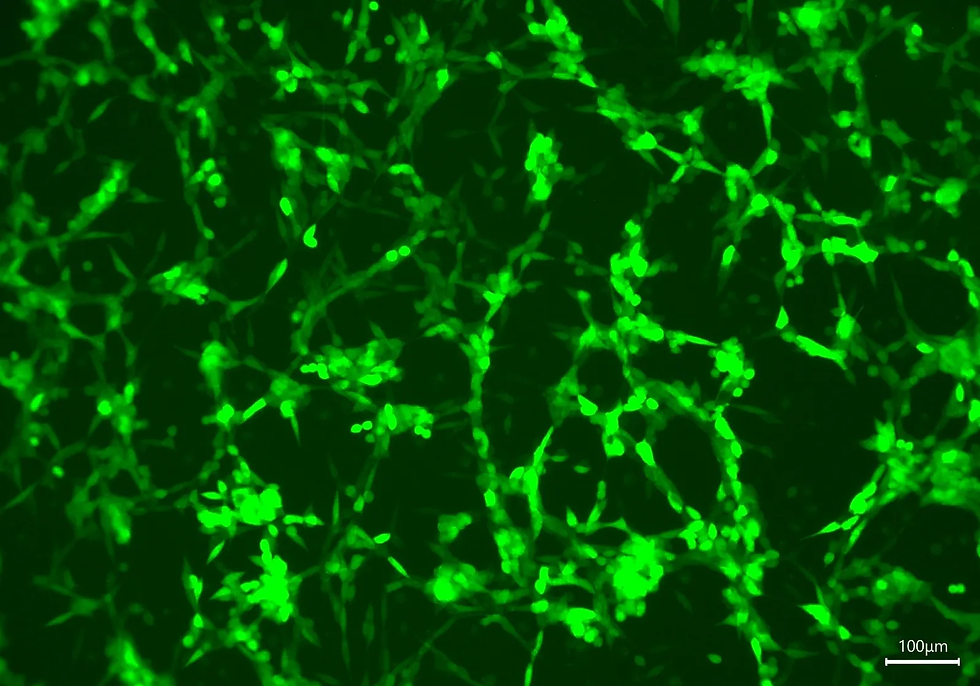
Cell reprogramming is like changing the conductor of an orchestra. The musicians and instruments remain the same, but a different conductor brings out entirely different sections, tempos, and dynamics. By transiently expressing a defined set of master regulatory transcription factors, we shift which sections of the genome are emphasized or silenced, reorganizing gene expression and guiding the cell toward a new functional state.
Historically, the main challenges have been identifying the right master regulators and delivering them effectively into cells in vivo. With the emergence of foundation models, AI-driven in silico screening, and new delivery technologies, those challenges are increasingly becoming solvable, enabling rapid iteration and practical therapeutic development.”
How Helix Supports Reprogram’s Progress
“What kind of support has Helix provided that has helped move your work forward? Has working with a team like Helix changed anything about your approach—for example, design iterations, process capabilities, etc.?
For any biotech company, finding a reliable service provider is critical, as it directly impacts both the speed and quality of research. Working with the Helix team has made a meaningful difference for us. Their deep technical expertise across mRNA design, delivery, and manufacturing has helped us make the right design choices early and avoid unnecessary iteration.
As a result, we have been able to generate high quality materials on a reliable timeline and move efficiently into preclinical testing, which has significantly accelerated our progress and increased confidence in our in vivo studies.”
What’s Next for Reprogram Biosciences
What’s next for Reprogram Biosciences? How do you see the field evolving over the next few years and where does your company hope to accomplish in that future?
In the near term, our focus is on demonstrating that cell reprogramming can work reliably and powerfully in vivo, starting with oncology and expanding into a broader pipeline of programs. Showing that we can consistently redirect cell behavior inside the body is the key milestone that unlocks everything that follows.
Looking ahead, we believe medicine is on the verge of a shift from treating diseases by targeting individual molecules to treating them by rewriting cellular behavior. As mRNA, delivery, and computational design continue to mature, it will become possible to deploy entire gene programs as drugs. Our ambition is to help define that future and to make cell reprogramming a foundational therapeutic modality, one that opens entirely new ways of thinking about what medicine can do.”
